But if I get less than 8 hours of sleep, my day starts with a slight disadvantage before it's even begun. I find myself assuming I'll be more tired, have less energy, and a shorter fuse. But truth be told, I get just as much work done, and by the end of the day, I look back on a good day just as often as not.
How many hours of sleep provide the most relaxation?
We’ve essentially trained ourselves to believe that we need 8 hours of sleep. This message has been around for a long time, trickling down from many generations before us. Extensive research has been conducted on this topic. The University of the Netherlands has presented lectures stating that 8 hours of sleep isn't necessarily the most important factor. If you spend those 8 hours sleeping lightly and waking up frequently, the number doesn't mean much. Ultimately, a night with 6 hours of deep sleep provides much more rest and relaxation.
How does our sleep work?
To understand this better, it’s helpful to know how sleep functions. Sleep consists of phases: light sleep and deep sleep. Our nightly rest is a combination of these two. This has its roots in prehistory; back then, due to the threat of wild animals, it wasn't safe to be in a deep sleep for long consecutive periods. Even though those threats are gone, our sleep phases haven't changed.
Quality vs. Quantity
When it comes to sleep: quality is more important than quantity. The beginning of the night contains the most deep sleep roughly 4.5 to 5 hours. This phase is the most restorative and provides the most rest. Deep sleep is vital for things like tissue repair, muscle growth, and memory consolidation. The sleep that follows is often referred to as "residual sleep."
Sleep Pressure: What is it?
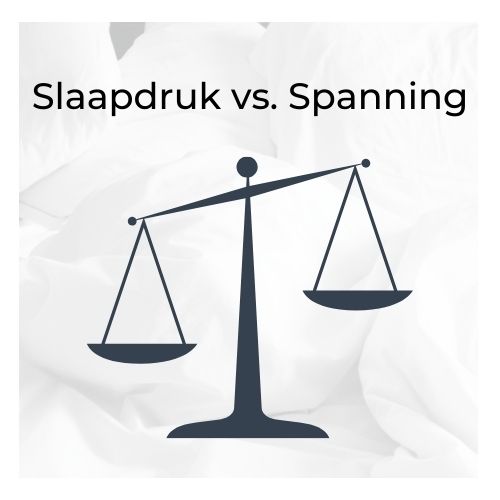
If you want to sleep well, maintaining healthy sleep pressure is essential. Sleep pressure is what makes it impossible to keep your eyes open at the end of the day. Generally speaking, the longer you stay out of bed, the higher your sleep pressure becomes. Opposing sleep pressure is tension. While sufficient sleep pressure helps you drift off, tension makes you more alert and awake. This leads to trouble falling asleep and lighter sleep, resulting in a less-than-refreshed you the next morning.
How do you ensure deep sleep?
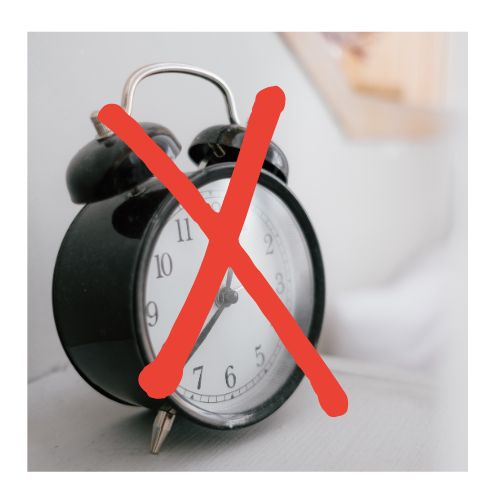
Most of the tips we can offer are common sense, but they are no less important. For example, no caffeine and no screens (blue light) before bed. These increase your alertness and have an immediate negative effect on your sleep pressure. Something you might not expect to be an influence is your alarm clock. It often feels nice to see the time during the night, but this actually increases alertness and tension. Again, this does nothing to improve deep sleep. Simple tip: cover your alarm clock or just turn it around.
What can help you achieve good sleep?
It’s important to realize that your night is a reflection of your day. How your day unfolds has a direct impact on your night and your sleep quality. Therefore, ensure you get enough relaxation during the day. An easy way to do this is by taking sufficient breaks. This helps you de-stress, keeps your tension low, and keeps your sleep pressure balanced. Try to avoid napping; it increases the chance that you won't be tired enough at night. And finally, exercise—this likely comes as no surprise. Physical activity, like walking or cycling, promotes relaxation.
Relax!
It’s clear that it’s not as simple as: “I slept 8 hours, so I’m fine,” or “I slept well but it was only 6 hours oh no!” The quality of your sleep says much more than the quantity of sleep you get. Focus on finding relaxation throughout your day wherever possible to reap the benefits at night.
The help of quality bedding
We haven't even discussed the right bedding yet, but that is, of course, essential. Our advice: treat yourself to natural materials!Wool, cotton, down, Tencel, bamboo, or silk are all wonderfully breathable, and many are also excellent insulators. They keep you warm without feeling stuffy, creating a sleep climate that offers immediate benefits. Do you have questions about your sleep or what might help you achieve an optimal night’s rest? Call, email, or chat with us, and we’ll look at what suits you best together.